
UX Design and Agile look like philosophically opposite cultures. UX wants research, slow iteration, and user validation before building. Agile wants two-week sprints, fast delivery, and continuous increments. Wire them together badly and you get the worst of both worlds: design rushed without validation, and engineering rewriting everything every sprint.
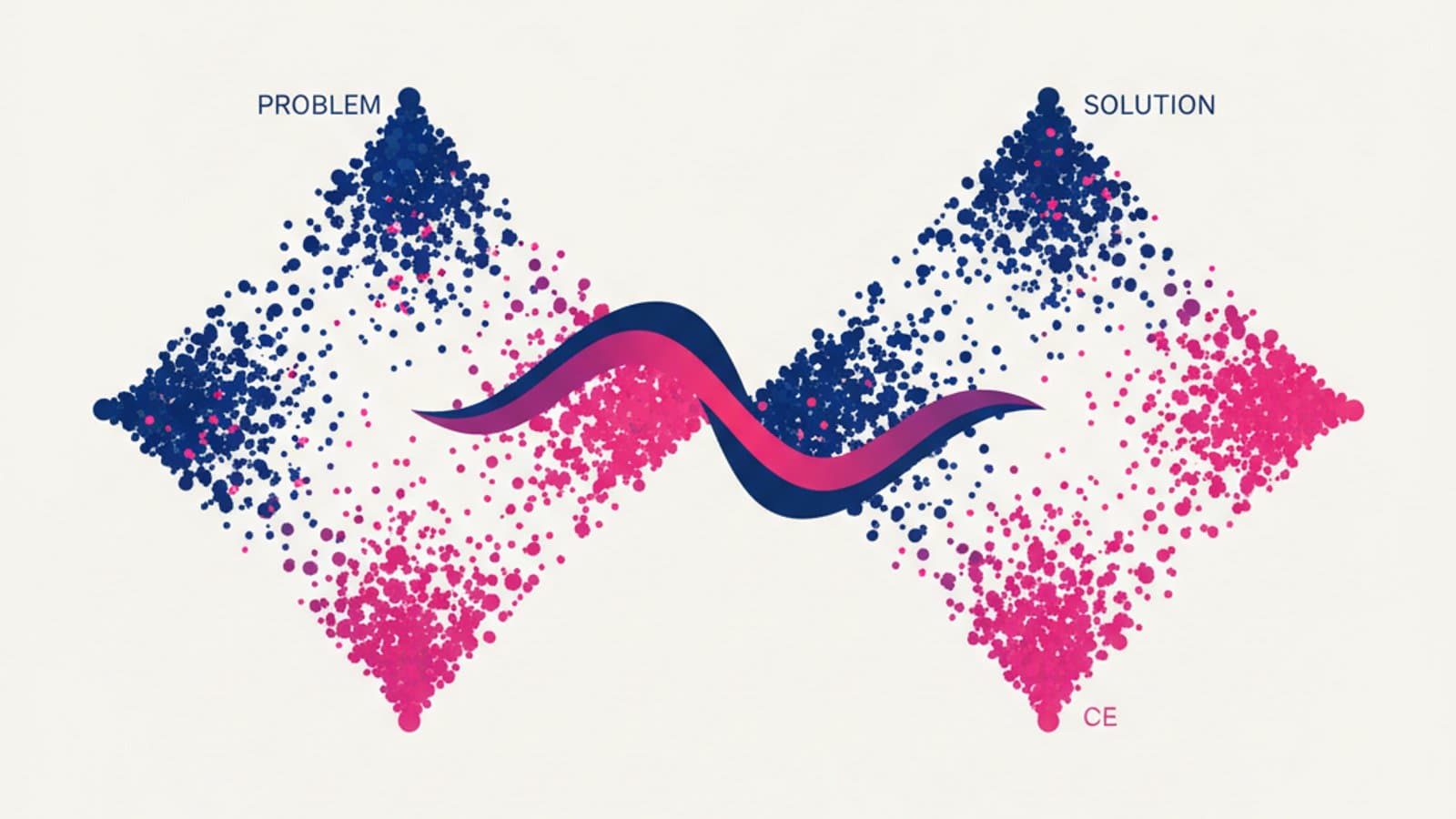
Yet in 2026 thousands of product teams run the two approaches together effectively. The key is dual-track agile: a model where research and design run in parallel with engineering, on two separate but synced tracks. This article explains how it works, what the designer's role looks like on a modern Agile team, how design sprints fit in, and the typical mistakes that kill UX inside a Scrum process.
What you'll learn:
- Why UX and Agile look incompatible (and why they aren't)
- The dual-track model: discovery and delivery in parallel
- The designer's role on a modern scrum team
- How design sprints plug into the agile flow
- The common mistakes that destroy UX inside Agile processes
Why UX and Agile look incompatible
The conflict comes from a misunderstanding. Classic Agile, born for software engineering, runs on short development cycles (1–2 week sprints) where you build, test, and ship. Classic UX, born from research and design, runs on long discovery phases (interviews, synthesis, wireframes, testing) before deciding what to build.
Line them up directly and the timelines don't match:
- Pure Agile: "We start building Monday, the demo is in two weeks."
- Pure UX: "Give us four weeks of research before we decide what to design."
If design has to chase the sprint, it becomes execution delivery with no research — the designer draws whatever the product manager asks for, fast, without validation. If the sprint has to wait for design, engineers sit idle.
The problem isn't Agile itself, it's forcing UX inside the development sprints. The fix is to separate the two streams.
The dual-track agile model
Dual-track agile was popularized by Marty Cagan at Silicon Valley Product Group and Jeff Patton in his book User Story Mapping. The idea is simple: instead of one track where design and engineering chase each other, you work on two parallel synced tracks.
Track 1: Discovery (what to build)
The discovery team — typically a product manager, UX designer, UX researcher, and engineering lead — runs 2–3 sprints ahead of delivery. It explores hypotheses, runs research, validates prototypes, and decides what should enter the next development cycle.
The cadence is looser than delivery: some discoveries take a few days, others weeks. What matters is that every delivery sprint starts from an idea that's already validated, not one still to validate.
Track 2: Delivery (how to build it)
The delivery team — engineers, QA, and a designer in a support role — takes what discovery has validated and builds it in normal agile sprints. No strategic decisions happen on this track: only execution of pre-validated work.
Syncing the two tracks
The critical question is how the two tracks communicate. The standard pattern:
- Weekly refinement where discovery shows delivery what's coming
- Shared backlog: validated features enter delivery's backlog with full detail
- Embedded designer: the designer who ran discovery sits with delivery during implementation to answer questions
This model lets the designer do serious research without blocking engineering, and lets engineering ship sprint after sprint without building the wrong thing. Teams at companies like Atlassian, Shopify, and Intercom have documented variants of this model publicly.
The designer's role on a modern scrum team
On a dual-track team the designer doesn't live on one rail — they live between the two. Typical responsibilities:
In discovery
- Running research with real users (interviews, testing, surveys)
- Synthesizing insights into design decisions
- Prototyping solutions in Figma to test them
- Validating with usability tests before handing off to delivery
- Facilitating workshops with the product manager and engineers
At the handoff to delivery
- Writing deliverables (final mockups, flows, behavioral specs)
- Documenting decisions and opening detailed tickets for delivery
- Collaborating with engineers to clear up technical or interpretive questions
In delivery
- Reviewing engineering work in staging to make sure it matches the design
- Answering small questions that come up during implementation
- Contributing to the design system with reusable patterns
- Gathering feedback from early users after release, which feeds the next discovery cycle
In this model the designer isn't a junior frontend engineer and isn't an academic researcher: they're a facilitator of informed decisions, with one foot in discovery and one in delivery.
Design sprints inside the agile flow
The Design Sprint from Jake Knapp (Google Ventures) is a specific methodology: 5 intense days where a small team goes from problem to prototype tested with real users. It isn't Agile — it's its own thing — but it plugs into the agile flow for specific cases.
When to run a design sprint
- New product areas where you don't know where to start
- Strategic decisions between 2–3 different directions
- Stuck problems the team can't crack with its daily process
How to integrate sprints into Agile
A design sprint is an injection of accelerated discovery. The discovery squad pauses normal planning for 5 days, runs the sprint, then resumes with a validated result that becomes the starting point for the next 2–3 weeks of "normal" discovery.
This isn't something to do every month — it would burn out the team. Typically 2–4 design sprints a year, at key decision moments.
Common mistakes when mixing UX and Agile
Five patterns that destroy UX inside agile processes.
1. The designer is always behind the sprint
The product manager writes the user stories, the sprint starts, and the designer has to deliver mockups "by Wednesday because engineering is waiting." Result: design rushed without research, redone the next sprint. Dual-track exists precisely to prevent this.
2. Pure upfront design
The opposite mistake: the team does 4 weeks of design at the start of the project, then hands engineers a giant package. Waterfall dressed up as Agile. It doesn't work because feedback from early releases can't shape the later ones.
3. Skipping research because 'no time'
"This sprint we're skipping research because we're in a rush" is the bridge to UX debt that costs 3× more to pay off in six months. The team should protect research time the way it protects code review time: it's time that comes back with interest.
4. Designer isolated from the team
A designer who sits in a separate room and "throws the mockup over the wall" isn't Agile. The Agile designer is embedded: stand-up, planning, retros alongside the rest of the team.
5. 'Agile UX' as an excuse to skip phases
Some teams read "Agile UX" as "compress the UX phases into 2 hours." That isn't what it means. Dual-track doesn't compress the phases — it shifts them in time relative to delivery, while preserving the time each one needs.
The Lean UX approach
Alongside dual-track, there's a school called Lean UX (Jeff Gothelf) that pushes even harder on speed and experimentation. The core idea: instead of investing weeks in deep research, produce a hypothesis fast, build a minimum MVP to validate it, learn from data, and iterate.
Lean UX works well for:
- Early-stage startups without product-market fit
- Exploring new markets where you don't know what users want
- High-traffic products where you can test many hypotheses quickly
It's a poor fit for enterprise contexts with heavy regulation, mission-critical products, or sectors where mistakes carry reputational or legal cost.
Designer skills for an Agile context
An effective designer on a dual-track Agile team has these skills:
- Speed of prototyping: building testable wireframes and prototypes in Figma quickly
- Lightweight research methods: fast interviews, tests with 3–5 people, quick synthesis
- Written communication: documenting decisions so others understand without needing to talk to you
- Facilitation: running short, effective workshops
- Collaboration with engineers: understanding what's feasible, negotiating trade-offs
- Value orientation: knowing when to say "this research isn't needed now, let's do it after the first release"
Frequently asked questions
What is dual-track agile?
It's an organizational model where the product team works on two parallel rails: discovery (what to build, with research and design) and delivery (how to build it, with engineering and QA). The two tracks are synced but run at different rhythms. Discovery stays 2–3 sprints ahead of delivery.
Can a small team run dual-track?
Yes. Dual-track doesn't require large teams — it requires a mindset. Even on a team of 4–5 you can separate "what we'll do in 4 weeks" (discovery) from "what we're building now" (delivery). The realistic minimum is a product manager + a designer + an engineer.
What does the designer do during the delivery sprint?
Helps engineers with questions as they come up, reviews the implementation in staging, contributes to the design system, and prepares discovery for upcoming sprints. They aren't sitting on the bench: they work in parallel with delivery on the next discovery cycle.
How long should feature discovery take?
It ranges from 1–2 days for small improvements to 3–4 weeks for new product areas. The point isn't to fix a duration, it's to make sure discovery is finished before the delivery sprint starts.
Are Agile and waterfall really opposites?
In theory yes, in practice most teams use a blend. Many mid-sized US and UK companies run processes they call "Agile" but are really "waterfall with stand-ups." True dual-track agile is rarer but it's the model mature organizations converge toward.
How do I convince my team to adopt dual-track?
Show the data on current problems: rework time, UX debt, features built and then removed because users ignored them. Dual-track doesn't sell with "it's more agile" — it sells with "it reduces waste." The language of business works better than the language of the Agile manifesto.
Next steps
To go deeper into how design works inside a modern team:
- Read the guide to user research to understand what happens during discovery
- Study what Interaction Design is and how it becomes a deliverable
- Dig into the UX audit process that precedes any design sprint
CorsoUX's full UX Design course includes a module on collaborating with product managers and engineers in real Agile teams, with exercises on company case studies.