
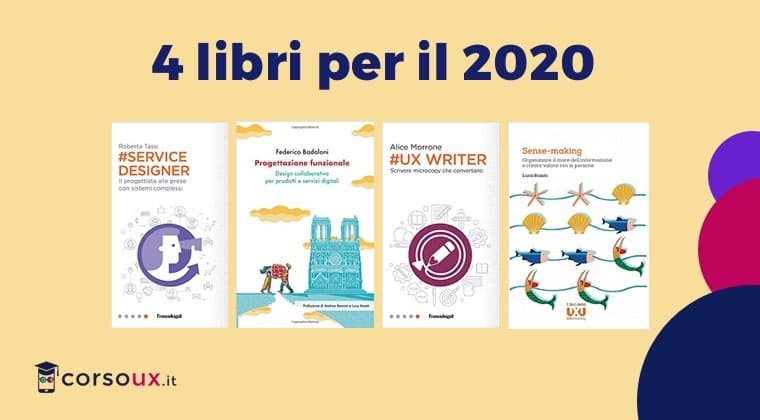
The UX Design classics — Norman, Krug, Cooper — are still foundational and haven't aged. But the discipline keeps moving: in the last three years new themes have emerged (generative AI, spatial computing, new accessibility regulations, mature design systems) that books from 2015–2020 couldn't address. For a designer looking to stay current in 2026, it makes sense to pair the classics with a selection of recent reads that capture where the field is heading.
This article presents 5 UX Design books published between 2023 and 2026 that we consider essential for understanding recent evolutions of the discipline. They don't replace the classics — they complement them.
What you'll learn:
- Why you need to read recent literature too
- The 5 most relevant books from 2023–2026
- How to balance classic and recent reads
- Emerging themes these books cover
- How to find valuable new books going forward
Why you should read recent literature too
Three trends from 2023–2026 the classics couldn't cover:
Generative AI in design: tools like Figma AI, Uizard, and Galileo are changing the workflow. How do you integrate them into your process? How does the designer's role change? Recent books are starting to offer answers.
Spatial computing and XR: the launch of Apple Vision Pro (2024) has mainstreamed the conversation around immersive design. New guidelines, new patterns, new constraints. Recent books cover this territory.
Accessibility regulations: with the ADA, Section 508, the European Accessibility Act (in force since 2025), and the UK's Equality Act 2010, accessibility has become a hard requirement for many products sold to US, UK, and EU users. Recent literature treats accessibility with regulatory urgency, not as an abstract ideal.
Reading only the classics in 2026 is like reading only Plato to understand modern philosophy: indispensable but insufficient.
5 recent books to read
1. AI for Designers — a fast-moving space
Books on AI applied to design are one of the most dynamic categories of 2024–2026. Multiple authors are publishing practical guides on integrating AI tools into a product designer's workflow — from using Midjourney for mood boards to generating wireframes with Galileo, from using Figma AI to the designer's evolving role as "curator" instead of executor.
What to look for: books that treat AI as a practical daily tool, not as speculation about the future. Practical guides from 2025 are more useful than the philosophical essays of 2023 because they reflect the real experience of designers using these tools every day.
Why it matters: AI is reshaping 20–30% of the design workflow. Anyone who doesn't adapt in time risks falling behind. Structured books help you integrate AI systematically rather than anecdotally.
2. Designing for Accessibility — post-2023 picks
With WCAG 2.2, ADA enforcement, Section 508 requirements for federal contractors, and the European Accessibility Act in force since 2025, a new generation of accessibility books has shipped to help product teams reach compliance. They try to move beyond the simple WCAG checklist to treat accessibility as an integral part of the design process.
What to look for: books that include real case studies from US and European companies that have had to comply with the new regulations. Authors who combine a legal background with hands-on design experience produce the most useful material.
Why it matters: accessibility is no longer a "nice to have." It's a legal requirement for many products sold into the US, UK, and EU markets. Anyone ignoring this in 2026 is professionally and legally exposed.
3. Spatial Computing Design — XR books after Vision Pro
The launch of Apple Vision Pro in February 2024 catalyzed a new generation of books on design for AR and VR. Before Vision Pro the literature was scattered and academic; after, it became more practical and product-oriented.
What to look for: books that specifically tackle the visionOS and Meta Human Interface Guidelines, not just generic "3D design" theory. The most useful books combine cognitive principles (how human vision works in space) with practical platform guidelines.
Why it matters: even though mainstream XR is still a few years out, anyone building expertise now will be in a privileged position when the market scales. And some spatial design decisions are already relevant to web and mobile (immersive scroll, lightweight 3D assets, WebAR).
4. Design Systems: practical books 2024–2026
Design systems are now the heart of every mature digital product. Recent books approach them not as a "concept" but as daily practice: governance, versioning, design tokens, collaboration with engineers, long-term maintenance.
What to look for: books written by people who actually built and maintained design systems at companies with hundreds of designers. Authors coming from Shopify, Atlassian, Adobe, or IBM bring the necessary experience.
Why it matters: if you work at a mid-size or large company, you'll likely spend 30–50% of your time on design-system work. Knowing the governance patterns is essential to being effective.
5. Strategic Design Thinking — books for senior designers
A new wave of books is positioning design as a strategic discipline inside companies, not just as an execution function. They talk about how designers can shape business decisions, influence product roadmaps, and communicate with the C-suite.
What to look for: books that go beyond the "design thinking workshop" and get into how the design function scales in a company from 50 to 5,000 people. Silicon Valley and UK tech authors (ex-Google, ex-Airbnb, ex-Monzo) tend to have the most grounded case studies.
Why it matters: if you're aiming for design leadership roles (lead, principal, director) within 5–10 years, these books prep you for the conversations you'll need to hold.
How to balance classic and recent reading
It's not about replacing the classics with recent books — it's about integrating. A balanced reading plan for a mid-level designer:
- 70% classics: Norman, Cooper, Krug, Garrett. The fundamentals don't age.
- 30% recent: books from the last 2–3 years on emerging themes.
The specific mix depends on your career stage:
- Junior (0–2 years): 80% classics, 20% recent. Absolute priority on fundamentals.
- Mid (2–5 years): 70/30. You already know the classics — start exploring trends.
- Senior (5+ years): 50/50. Most fundamentals are in place; now you need to see where the field is heading.
- Lead/Principal (8+ years): 40/60. You're a reference point for your team — you need to anticipate trends.
How to find valuable new books
Three channels for discovering quality books before they become mainstream:
1. Author promotion on LinkedIn
Authors of technical books in 2026 promote their work almost exclusively on LinkedIn in the first weeks after release. Following 20–30 reference authors in the field surfaces new books in your feed naturally.
2. Practitioner reviews on blogs
Several senior designers publish honest reviews of the books they read. Look for reviews from people you already trust as a source, not the generic Amazon reviews.
3. Books cited in the best articles
When you read a piece from an author you respect and they cite a book, take note. Books recommended by sources you trust have a much higher chance of being worthwhile.
Common mistakes when picking recent books
1. Trend-chasing
Reading every "future of design" book after every conference. Most of these books age in 18 months. Better to wait until a book has been read and cited for a few months before investing time.
2. AI-generated books in disguise
With AI tools more accessible, 2024–2026 has seen a flood of low-quality, partially AI-generated books. Red flags: repetitive structure, vague examples, an author with no verifiable track record, suspiciously low prices on Amazon self-publishing.
3. Inspiration-only books
Books that are "just beautiful design imagery" are pleasant to flip through but add little to your technical skill. Great as mood boards, useless as training.
Frequently asked questions
How many new books should I read per year?
For an active designer, 4–6 books per year is a sustainable pace. Fewer than 2 means you're not staying current; more than 12 is probably surface-level reading.
Are Kindle editions as good as print?
For technical books with many screenshots and diagrams, print is often preferable. For mostly text-based books, Kindle is practical and portable. Judge case by case.
Are self-published books worth reading?
Yes — some of the best recent technical books are self-published by authors who prefer editorial control (e.g. Refactoring UI). The criterion is always: who is the author, what's their experience, what do independent reviews say.
Should I also read marketing and business books?
If you want to grow professionally, yes. Senior designers interact with product managers and business stakeholders every day. Knowing their language (OKRs, retention, CAC, LTV, product-market fit) makes you significantly more effective.
Does a book's content age?
It depends on the topic. Cognitive principles (Norman) don't age. UI patterns age in 3–5 years. References to specific tools age in 1–2 years. The best books focus on principles and use tools as examples, not the other way around.
Next steps
To build a solid personal library:
- Start with the classic UX Design books as your foundation
- Add recent reads on AI, accessibility, and spatial design
- Follow UX online resources to stay updated on new titles
CorsoUX's complete UX Design course continuously references relevant literature — classic and recent — integrated into the hands-on exercises in each module.